


Raypak vs Hayward Pool Heater: Which Gas Heater Is Right for Your Pool?

If you're shopping for a gas pool heater, Raypak and Hayward are probably both on your short list. Both build solid heaters, both cover everything from a spa to a large backyard pool, and both will keep the water comfortable through a desert winter. So which one should you buy?
The honest answer is that it depends on a few details most comparisons skip: what the heat exchanger is made of, whether your area requires a Low NOx heater, how high above sea level your house sits, and how each warranty actually works. Here's how the two lines compare using the manufacturers' own specs, and how to pick the right one for a pool in Arizona or Las Vegas.
The Short Answer
This comparison covers the heaters most pool owners are choosing between: Raypak's Digital line (models 206A through 406A, plus the compact 106A and 156A) and Hayward's Universal H-Series Low NOx line.
- Pick Raypak if you want a lower price at the same size, a simpler burner with no combustion blower, and a two-year parts-and-labor warranty when it's professionally installed at your home.
- Pick Hayward if you run a salt system and want cupro-nickel without choosing a special model, your area requires a Low NOx heater, or you want a heater that's converted for elevation on site.
Efficiency isn't a real tiebreaker. Raypak rates its Digital heaters at 82%, and Hayward lists 82.7% to 84% depending on size. That's a couple of percentage points at most, so the decision comes down to fit, not gas savings.
Raypak vs. Hayward at a Glance
| Raypak Digital (206A–406A) | Hayward Universal H-Series | |
|---|---|---|
| Sizes | 199,500 to 399,000 BTU (the 106A and 156A cover 105,000 and 150,000) | 150,000 to 400,000 BTU, plus a 500,000 BTU model |
| Heat exchanger | Copper standard; cupro-nickel versions available | Cupro-nickel standard on every model |
| Burner design | Atmospheric (no combustion blower) | Forced draft (combustion blower) |
| Ignition | Intermittent spark pilot | Silicon nitride hot surface igniter |
| Emissions | Standard (Raypak sells separate Low NOx models) | Low NOx |
| Thermal efficiency | 82% | 82.7% to 84%, depending on size |
| Water flow | 20 to 100 GPM | 20 to 125 GPM (minimum rises with size) |
| Water connections | 2" CPVC; PVC can plumb directly to the heater | 2" x 2-1/2" CPVC unions; left- or right-side connections |
| Elevation | Ordered by elevation range (#50 or #51 for natural gas) | Converted on site with the included air inlet plates |
| Factory warranty | 2 years parts and labor (licensed install at a single-family home) | 1 year parts only on W3 "Open Line" models (the ones on our website) |
Heat Exchanger: Copper vs. Cupro-Nickel
The heat exchanger is the most expensive part of a gas heater, and it's the part that pays the price when water chemistry goes wrong. This is the biggest real difference between the two brands.

Raypak uses a finned copper tube heat exchanger on its standard Digital heaters and builds cupro-nickel versions for tougher water. The model number tells you which one you're looking at: a model ending in -C is copper, and -X is cupro-nickel.
Hayward puts a cupro-nickel heat exchanger in every Universal H-Series heater and markets it for salt water and chemical corrosion resistance. Hayward also uses what it calls "Totally Managed" flow, which is designed to move water at the same velocity through every tube.
Cupro-nickel holds up better against corrosion than copper, which is why both brands position it for salt pools and aggressive water chemistry. In practice:
- Tablets or liquid chlorine with balanced water: a copper Raypak like the Raypak 266A copper heater is the lower-cost way to go.
- Salt system, or water chemistry that tends to drift: go cupro-nickel. That means a Raypak cupro-nickel model like the Raypak 266A cupro-nickel heater, or any Hayward H-Series.
Either way, chemistry still matters. Both manufacturers exclude damage from unbalanced water in their warranties, and no heat exchanger material makes low pH harmless. If you're still deciding how to sanitize, our salt vs. chlorine cost breakdown covers what each one really costs to run.
Raypak's ProTek Shield
Current Raypak Digital heaters include a ProTek Shield, a sacrificial module in the header that takes the corrosion so the heat exchanger doesn't. When it wears away, that means it's working.

It's a wear part, and Raypak's warranty treats it that way. The shield has to be replaced during routine service, the shield itself isn't covered, and damage caused by a worn-out shield that wasn't replaced is excluded from coverage. Have it checked whenever the heater is serviced, and keep a replacement ProTek Shield assembly (017960F) on hand.
How They Burn: Atmospheric vs. Forced Draft
The two brands light and burn gas in different ways.
Raypak's 206A–406A are atmospheric heaters. They don't use a combustion blower. Raypak saves the blower for its separate Low NOx models. Ignition is an intermittent spark pilot: the pilot only lights when the heater calls for heat, and the pilot then lights the main burners. The cabinet top is designed to keep the heater running in windy conditions.
Hayward's H-Series is forced draft. A blower moves air through the combustion chamber at a set rate, which Hayward says removes outside weather variables like wind without needing a high-wind stack. Ignition is a silicon nitride hot surface igniter instead of a pilot. That controlled combustion is also how Hayward meets Low NOx standards.

What it means for you: the Raypak has no blower to wear out, and the Hayward has no pilot to clean or relight. When it's time for a repair, our Hayward heater parts diagrams let you click the exact part on an exploded view, and our pool heater replacement parts include Raypak pilots, pressure switches, headers and more.
Low NOx: Know Whether You Need It
Low NOx heaters burn cleaner and produce less nitrogen oxide. Some regions require them, Southern California being the best-known example.
- Hayward: every Universal H-Series heater is Low NOx. Hayward states it meets or exceeds South Coast AQMD Rule 1146.2 Low NOx standards.
- Raypak: the Digital 206A–406A heaters we carry are standard emission. Raypak builds separate Low NOx Digital models, and it notes that its 106A and 156A can't be sold in Low NOx markets, including Southern California and Utah.
If a Low NOx heater is required where your pool is, confirm it before you buy. Hayward is the simplest way to cover it.
Elevation: The Detail That Catches Las Vegas Buyers
Gas heaters are set up for a specific elevation range, because thinner air changes how the burners need to be supplied. Install the wrong setup and the heater won't run the way it should. The two brands handle this differently.
Raypak sets it at the factory. Raypak Digital natural gas heaters are built with a #50 burner orifice for 0 to 1,999 feet or a #51 orifice for 2,000 to 5,999 feet. You'll see the number right in the product name, so order the one that matches your address. The propane Raypak Digital heaters we carry, like the Raypak 266A propane heater, are #57 models built for elevations up to 2,000 feet.
Hayward converts on site. According to Hayward's installation manual, the H-Series can be installed up to 10,100 feet above sea level with the correct blower air inlet plate. The plates needed for outdoor installs up to at least 7,700 feet come with the heater, and higher installs need a separate high-altitude kit. Someone still has to install the right plate, so make sure your installer knows your elevation.
Here's where that lands locally:
- Phoenix area: Phoenix sits around 1,100 feet, so most Valley homes fall in Raypak's #50 range.
- Las Vegas area: the Strip is around 2,000 feet. Much of Henderson sits between 1,500 and 2,000 feet, while higher neighborhoods like Anthem average around 2,800 feet. Summerlin averages about 3,500 feet.
That means a lot of Las Vegas valley homes need a #51 Raypak or a Hayward set up for elevation, and homes near the 2,000-foot line could go either way. Look up the elevation for your exact address before you order.
Flow, Plumbing and Replacement Fit
A gas heater needs enough water moving through it to fire, and too much flow can be a problem too. Here's how the two compare:
- Raypak 206A–406A: 20 to 100 GPM. The compact 106A and 156A handle 20 to 70 GPM.
- Hayward H-Series: up to 125 GPM. The minimum is 20 GPM on the 150,000 and 200,000 BTU models and climbs to 30 GPM on the larger sizes.
Both have a built-in bypass. Raypak's Unitherm Governor automatically regulates flow to keep the water in the heat exchanger above 105°F, which helps prevent condensation. Hayward uses a patented header bypass design.
If you have a variable speed pump, make sure it delivers the heater's minimum flow whenever the heater is on. Our guide to setting a variable speed pump schedule explains how to build a higher-speed window for heating without running high speed all day.
For replacements, connections matter. Raypak Digital heaters use 2" CPVC water connections that PVC can plumb directly to. Hayward uses 2" x 2-1/2" CPVC unions and lets you choose left- or right-side electric, gas and water connections, which helps when you're matching an existing pad. Before you order, take a photo of your current heater and the plumbing around it.
Warranty: Read the Fine Print
The two warranties work very differently, and this is where a lot of buyers get surprised.
Raypak: under Raypak's current pool heater warranty (effective June 27, 2025), the 106A, 156A, 206A, 266A, 336A and 406A carry two years of parts and labor. That coverage requires installation by a properly licensed service provider. Most of those models drop to one year if installed anywhere other than a single-family home, and labor is only covered for repairs done at Raypak's direction.
Hayward: the Hayward heaters on our website are W3 models, which Hayward labels "Open Line." Hayward lists 1-year parts coverage and no labor coverage on those models. Hayward says H-Series heaters purchased from a local Hayward authorized dealer carry 3 years parts and 1 year labor. If warranty length is a deciding factor for you, call us before you order.
Both warranties exclude damage from poor water chemistry, so keep the water balanced no matter which one you choose.
Price
At the time of writing, Raypak runs roughly $250 to $700 less than Hayward at comparable sizes on our site. The gap is smallest when you compare Raypak's cupro-nickel models to Hayward, since every Hayward is cupro-nickel. Compare the exact sizes you're considering, since prices change.
What Size Do You Need?
Gas heaters are sized mainly by your pool's surface area and how much you want to raise the temperature. Wind, shade and whether you use a cover all play a role. Hayward's sizing chart, for example, is based on a 30°F temperature rise, a 3.5 mph average wind and an elevation of up to 2,000 feet.
A bigger heater warms the pool faster. Because efficiency is about the same across sizes, it doesn't take much more gas to deliver the same amount of heat. It just gets there sooner. For the basics of how pool heaters work, see Know Your Pool Equipment: Pool Heaters.
Which One Should You Buy?
| Your situation | Good fit | Why |
|---|---|---|
| Phoenix-area pool, tablets or liquid chlorine, natural gas | A copper Raypak with a #50 orifice, like the Raypak 406A | Lowest cost, matched to Valley elevations |
| Salt pool in the Phoenix area | Hayward H-Series, like the Hayward 200,000 BTU natural gas heater | Cupro-nickel is standard, and the cupro-nickel Raypaks we stock are #51 models built for 2,000 feet and up |
| Salt pool in the Las Vegas valley (2,000 to 5,999 feet) | Raypak cupro-nickel #51 or Hayward | Both are cupro-nickel and fit the elevation; Raypak costs less |
| Low NOx heater required | Hayward H-Series | Low NOx on every model |
| Spa, small pool or tight equipment pad | The compact Raypak 156A or a Hayward 150,000 BTU | Smaller cabinet and lower cost for smaller bodies of water |
| Propane above 2,000 feet | Hayward, like the Hayward 200,000 BTU propane heater | The Raypak propane models we carry are built for up to 2,000 feet |

Thinking about a heat pump instead of gas? Our guide on how pool heat pumps work explains how they heat differently from a gas heater.
Common Questions
Is Raypak or Hayward better for a saltwater pool?
Either can work if you choose cupro-nickel. Every Hayward Universal H-Series heater has a cupro-nickel heat exchanger as standard. Raypak's standard Digital heaters are copper, so for a salt pool choose a Raypak cupro-nickel model, which has a model number ending in -X.
Do Raypak heaters work at Las Vegas elevations?
Yes, if you order the right version. Raypak Digital natural gas heaters with a #51 burner orifice are built for 2,000 to 5,999 feet, while #50 models are built for 0 to 1,999 feet. Much of the Las Vegas valley sits near or above 2,000 feet, and Summerlin averages about 3,500 feet, so check your address before ordering.
What do #50, #51 and #57 mean on a Raypak heater?
They're burner orifice sizes, which tell you the elevation and fuel the heater is built for. On Raypak Digital natural gas heaters, #50 is for 0 to 1,999 feet and #51 is for 2,000 to 5,999 feet. The #57 propane models are built for elevations up to 2,000 feet.
Which has the better warranty, Raypak or Hayward?
Raypak's Digital heaters carry two years of parts and labor when installed at a single-family home by a properly licensed service provider. Hayward lists one year of parts coverage with no labor on its W3 "Open Line" heaters, which are the models on our website. Hayward says H-Series heaters bought from a local authorized dealer carry three years parts and one year labor.
Are Hayward and Raypak heaters Low NOx?
Every Hayward Universal H-Series heater is Low NOx and meets or exceeds South Coast AQMD Rule 1146.2. Raypak's Digital 206A–406A and 106A/156A heaters are standard emission. Raypak makes separate Low NOx models for areas that require them.
What is the Raypak ProTek Shield?
It's a sacrificial module in the heater's header that corrodes in place of the heat exchanger. Raypak requires it to be replaced during routine service. The shield itself isn't covered by warranty, and damage caused by a worn-out shield that wasn't replaced is excluded.
Is Raypak or Hayward more efficient?
They're close. Raypak rates its Digital heaters at 82% thermal efficiency, and Hayward lists 82.7% to 84% depending on the H-Series size. That difference won't change your gas bill much, so choose based on heat exchanger, elevation, emissions and warranty instead.
The Bottom Line
Raypak and Hayward both make dependable gas heaters, and neither has a meaningful efficiency edge. Raypak gives you a lower price, a simple design with no combustion blower, and a stronger factory warranty with professional installation, as long as you order the right heat exchanger and elevation version. Hayward gives you cupro-nickel and Low NOx on every model and converts for elevation on site, at a higher price and with shorter coverage on the W3 models we sell online.
If you're heating this season, our post on when to start heating your pool for fall and winter will help you plan. Not sure which size or version fits your pool? Send us a photo of your current heater's rating plate or call 1-888-484-0864, and we'll help you find the right match.
Most Recent & Related Pool Supply Articles: Salt vs. Chlorine: What You Actually Spend Per Year, Paramount 6-Port Module (004-302-4408-00): Signs It's Failing and How to Replace It, Your Test Says the Chlorine Is Fine. So Why Did the Pool Turn Green?
Need help finding the right part?
Talk to a pool expert or stop by one of our stores.
Shop the article
Products mentioned in this article


Keep reading
More pool care tips
In this article
Shop this post
-
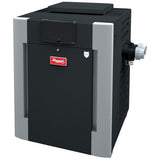 Raypak P-R266A-EN-C #50 Digital Natural Gas Heater, 266K BTU, Electronic Ignition, Polymer Headers, Copper Exchanger, 220 lbs | 009217$3,374.00
-
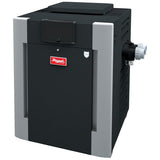 Raypak P-R266A-EN-X #51 Digital Natural Gas Heater, 240K BTU, Cupro-Nickel Exchanger, 220 lbs, ProTek Shield Module | 014939$3,742.00
-
 Hayward Universal H-Series Natural Gas Heater 200,000 BTUs, Low NOx | W3H200FDN$3,699.00
