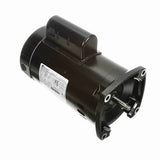
Pool Pump Motor Died This Fall? Replace It or Upgrade?

Every fall, the same thing happens. The pool made it through summer, the weather finally cools off, and then one morning the pump just hums. Or screeches. Or trips the breaker the second it kicks on.
The pump motor is one of the most common parts we replace this time of year, and it's one of our best-selling parts for a reason. But 2026 is different from past years. Federal rules have changed what replacement motors can be built, and that changes the decision you're about to make. Here's how to tell whether the motor is really the problem, what your options are now, and when a motor swap still makes more sense than a whole new pump.
Why Pump Motors Fail in the Fall
Motors rarely die in the middle of July. They die after it. A single-speed pump runs at full speed every hour it's on, and in the desert that means long days through the hottest months of the year. By October, a few things have usually caught up with it:
- Worn bearings. Summer's long run times and heat finish off bearings that were already on their way out.
- A leaking shaft seal. When the seal goes, water drips down onto the motor shaft and into the front bearing. That's the most common way a cheap seal problem turns into a dead motor.
- A heat-damaged capacitor. Start capacitors don't love sitting in a hot equipment pad all summer.
- Storm damage. Monsoon power surges and lightning can take out windings or a capacitor without any warning until the next start.
Is It Really the Motor? Check These First
Not every pump that won't run needs a new motor. Before you buy anything, match what you're hearing to the likely cause.
| What you notice | Most likely cause | What it usually means |
|---|---|---|
| Hums but won't start | Bad capacitor, seized bearings, or something jamming the impeller | Could be a cheap fix. Check before replacing the motor. |
| Loud screeching or grinding | Worn bearings | The motor is near the end. Replace it or have the bearings rebuilt. |
| Trips the breaker immediately | Shorted windings or a wiring fault | Usually a motor replacement. Have the wiring checked too. |
| Runs, shuts off, restarts later | Overheating and the thermal overload is tripping | Check for poor ventilation, low voltage, or a starved pump before blaming the motor. |
| Water under the pump | Leaking shaft seal | Replace the seal now, before the bearings go too. |
The Shaft Spin Test
If the motor hums but won't start, this quick test narrows it down. Turn the power off at the breaker first. Most pool motors have a slot in the end of the shaft at the back of the motor. With the power off, try turning it with a flathead screwdriver.
- It spins freely: the capacitor is the likely culprit. That's a much cheaper part than a motor.
- It's stiff or won't turn: either the bearings are seized or something is jammed in the impeller. Open the pump basket and check the impeller for debris before you condemn the motor.
A word of caution: capacitors can hold a charge even after the power is off. If you're not comfortable working around that, have a pool tech or electrician test it.
What Changed in 2026: The DOE Motor Rule
This is the part most pool owners don't know yet.
Since 2021, new pool pumps have had to meet federal efficiency standards, which is why most new pumps you see today are variable speed. But replacement motors were left out of that rule. You could still drop a single-speed motor into an existing pump.
That gap is now closed. Under the Department of Energy's rule for dedicated-purpose pool pump motors, every replacement motor rated at 1.15 total horsepower or more and manufactured on or after September 29, 2025 must be variable speed. Smaller motors follow on a later timeline.
What that means in plain English:
- Manufacturers can no longer build new single-speed replacement motors in the size range most residential pumps use.
- Motors built before the deadline can still be sold. Once that inventory is gone, it's gone.
- That's why they're getting harder to find. If you've called around and been told "we can't get that anymore," this is why.
"Total horsepower" is the horsepower on the nameplate multiplied by the service factor. A 1-HP motor with a 1.25 service factor, for example, is 1.25 total horsepower. That puts nearly every 1 HP, 1.5 HP, and 2 HP pool motor in the covered range.
Option 1: Replace Just the Motor
If the pump itself is in good shape, a motor swap is still the fastest and cheapest way to get your pool running again. The pump housing, impeller, basket, and plumbing all stay. You're only replacing the part that failed.

This makes sense when:
- The pump housing, lid, and impeller are in good condition with no cracks
- You want the pool running again this week, not after a bigger project
- Your pool doesn't run long hours, so energy savings from a new pump would take a long time to pay off
- You're comfortable with basic wiring and a few bolts, or you have a tech who is
Because single-speed replacement motors can't be manufactured anymore, this option has a shelf life. We still carry the common ones, including the Century 1.5 HP square flange replacement motor that fits Pentair WhisperFlo pumps. It's one of the most-searched parts on our site, and once current stock runs out across the industry, it won't be back. Browse all our pool pump motors to find yours.
How to Make Sure the New Motor Fits
Everything you need is on the nameplate of your old motor. Take a photo of it before you do anything else. Match these:
- Horsepower and service factor. Your pump's impeller was sized for a specific motor. Match both numbers, not just the HP.
- Full-rated vs. up-rated. Two motors with the same HP on the label can have different total horsepower. A full-rated motor has a higher service factor than an up-rated one. Replace like with like.
- Flange type. Square flange and round (C-face) flange motors bolt to the pump differently and are not interchangeable.
- Frame size. Common pool motor frames include 48Y and 56Y. The frame determines whether the motor lines up with your pump's seal plate.
- Voltage. Many motors are dual voltage (115V/230V). Make sure the new motor is set to match the voltage your pump is wired for before you power it up.
If the nameplate is too faded to read, send us a photo of the pump label instead. The pump model will usually tell us which motor it shipped with.
Always Replace the Shaft Seal
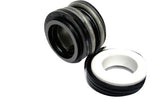
Any time the motor comes off the pump, the shaft seal has to be replaced. The old seal won't seal properly once it's been disturbed, and a leaking seal is exactly how a lot of motors die in the first place. A new seal costs a fraction of the motor. Pick up the right one from our pool pump seals at the same time, along with any gaskets or O-rings your pump's parts diagram calls for.
Option 2: Upgrade to a Variable Speed Pump
When the motor dies, it's a natural time to ask whether the whole pump should go. A variable speed pump costs more up front, but it runs at low speed most of the day, which is where the savings come from. Variable speed operation can cut pool pump energy use by roughly two-thirds compared with a single-speed motor.

Upgrading makes more sense when:
- The pump is old and the housing, lid, or impeller is cracked or worn too
- Your pool runs long hours, so energy savings add up quickly
- You want a quieter equipment pad (low-speed operation is dramatically quieter)
- Your utility offers a rebate on variable speed pumps, which can close much of the price gap. Check with yours before you buy.
- You're planning to stay in the home for years, long enough for the savings to pay you back
We carry Pentair variable speed pumps and Hayward variable speed pumps. If you go this route, our fall guide to variable speed pump schedules covers how to set one up so it actually saves you money.
Motor Swap vs. New Pump at a Glance
| Replace the motor | New variable speed pump | |
|---|---|---|
| Upfront cost | Lower | Higher, sometimes offset by utility rebates |
| Install time | About an hour or two for someone handy | Longer, often includes plumbing changes |
| Energy use | Same as before | Much lower when run at low speed |
| Noise | Same as before | Much quieter at low speed |
| Availability | Limited to remaining inventory for single-speed | Widely available |
| Best for | A pump in good shape that just needs to run again | An older pump, long run times, or long-term savings |
Common Questions
Can I still buy a single-speed pool pump motor in 2026?
Yes, but only from existing inventory. Federal rules require replacement pool pump motors of 1.15 total horsepower or more that are manufactured on or after September 29, 2025 to be variable speed. Single-speed motors built before that date can still be sold until supply runs out.
Why does my pool pump hum but not start?
The most common causes are a failed start capacitor, seized motor bearings, or debris jamming the impeller. With the power off at the breaker, try turning the motor shaft with a screwdriver. If it spins freely, the capacitor is the likely problem. If it's stiff, check the impeller for debris, then the bearings.
Is it worth replacing just the pump motor?
Often, yes. If the pump housing and impeller are in good shape, a motor swap gets the pool running for much less than a new pump. If the pump is old, your pool runs long hours, or your utility offers a rebate, a variable speed pump may be the better long-term choice.
How do I know which replacement motor fits my pump?
Match the nameplate on your old motor: horsepower, service factor, full-rated or up-rated, flange type (square or round), frame size, and voltage. If the label is unreadable, the model number on the pump itself can usually identify the original motor.
Do I need a new shaft seal when I replace the motor?
Yes. The seal should always be replaced whenever the motor is separated from the pump. A reused seal is likely to leak, and a leaking seal can ruin a new motor's bearings.
What's the difference between a full-rated and up-rated motor?
Both may show the same horsepower on the label, but a full-rated motor has a higher service factor, which means more total horsepower. Your pump's impeller is matched to the original motor, so replace a full-rated motor with a full-rated one and an up-rated motor with an up-rated one.
The Bottom Line
If your pump hums, screeches, or trips the breaker this fall, check the capacitor and impeller before buying a motor. If the motor really is done, you have two good options: swap in a matching replacement motor while single-speed stock is still available, or upgrade to a variable speed pump if the rest of the pump is tired or your pool runs long hours. Either way, replace the shaft seal at the same time.
Not sure which motor you have? Send us a photo of the nameplate or call 1-888-484-0864, and we'll help you find the exact match.
Most Recent & Related Pool Supply Articles: Fall Pool Care: What Summer Did to Your Filter and Variable Speed Pump, Salt vs. Chlorine: What You Actually Spend Per Year, Paramount 6-Port Module (004-302-4408-00): Signs It's Failing and How to Replace It
Need help finding the right part?
Talk to a pool expert or stop by one of our stores.
Shop the article
Products mentioned in this article


Keep reading
More pool care tips

In this article